
Inside Jerome County Property Tax Records
Jerome County splits one tax story across several linked records. The parcel number is the cleanest key. It matches assessment, parcel sheet, and bill. The public GIS map supplies the PIN and situs address, but its popup shows no values, exemptions, balances, or sale history, so those details come from the Assessor, the Treasurer, or a direct records request.
| Field | What it means | Official source |
|---|---|---|
| Assessed value | County estimate used in Idaho's tax system | Assessor parcel sheet |
| Exemption | Approved relief under current rules | Assessor |
| Tax amount | Charge and scheduled halves | Treasurer bill |
| Payment status | Paid or delinquent status | Treasurer |
| Tax-deed event | Notice and recorded-instrument clues | Treasurer and Recorder |
Billing and ownership run on separate systems in Jerome County. The name on a tax bill may differ from the grantee in the latest deed, and neither the assessed value nor a minimum bid sets an open-market price.
Jerome County Parcel Sheets Fill the GIS Gap
Parcel sheets cover what the GIS popup leaves out. The Jerome County Assessor can email a sheet or plat map. Just send the full PIN, property address, and tax year. Visit Room 205 at 300 N Lincoln Avenue. Hours generally run Monday through Thursday, 8:30 a.m. to 5 p.m. The sheet itself carries the detail. You get assessed value, taxable value, exemptions, mailing address, and tax balance. None of that appears on the map popup.
Open the official Assessor page for the current request route.
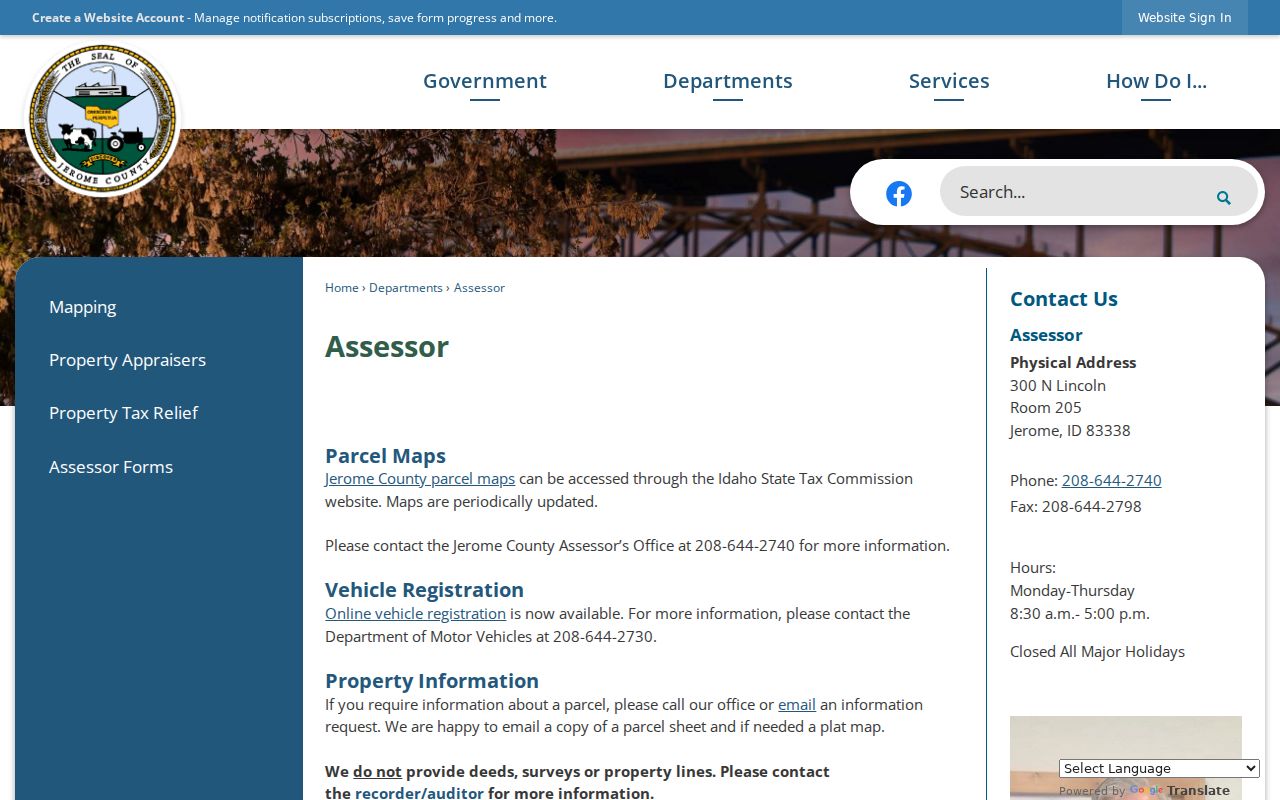
Use the official Assessor route for value questions.
Note: The Assessor directs deed, survey, and property-line questions to the Recorder or a licensed surveyor.
Look Up a Jerome County Tax Bill
Start with a parcel identity, not a name alone. Addresses can differ between the map and the bill. That gap is common with rural land or vacant parcels in Jerome County, so keep the tax year attached to every result.
- Capture the full PIN, situs, and check date from the parcel viewer.
- Ask the Assessor for the parcel sheet and confirm assessment and exemptions.
- Use the Jerome County Treasurer to obtain the bill and payment status.
- If delinquency appears, request the notice, result, and recorded instrument.
- Assessed value
- The county's value for the assessment process.
- Levy
- The combined rates applied by taxing districts.
- Exemption
- Relief that changes the taxable amount when current requirements are met.
- Tax lien
- A claim tied to unpaid property tax.
Jerome County Tax Dates and Missing Bills
Jerome County's calendar generally sets first-half taxes due December 20 and second-half taxes due June 20. A deadline on a weekend or holiday shifts to the next business day. Late payment still draws penalties and interest.
The county's property-tax guidance is blunt about missing mail. Failure to get a bill does not excuse payment. Report an address change or missing bill to the Treasurer or Assessor right away.
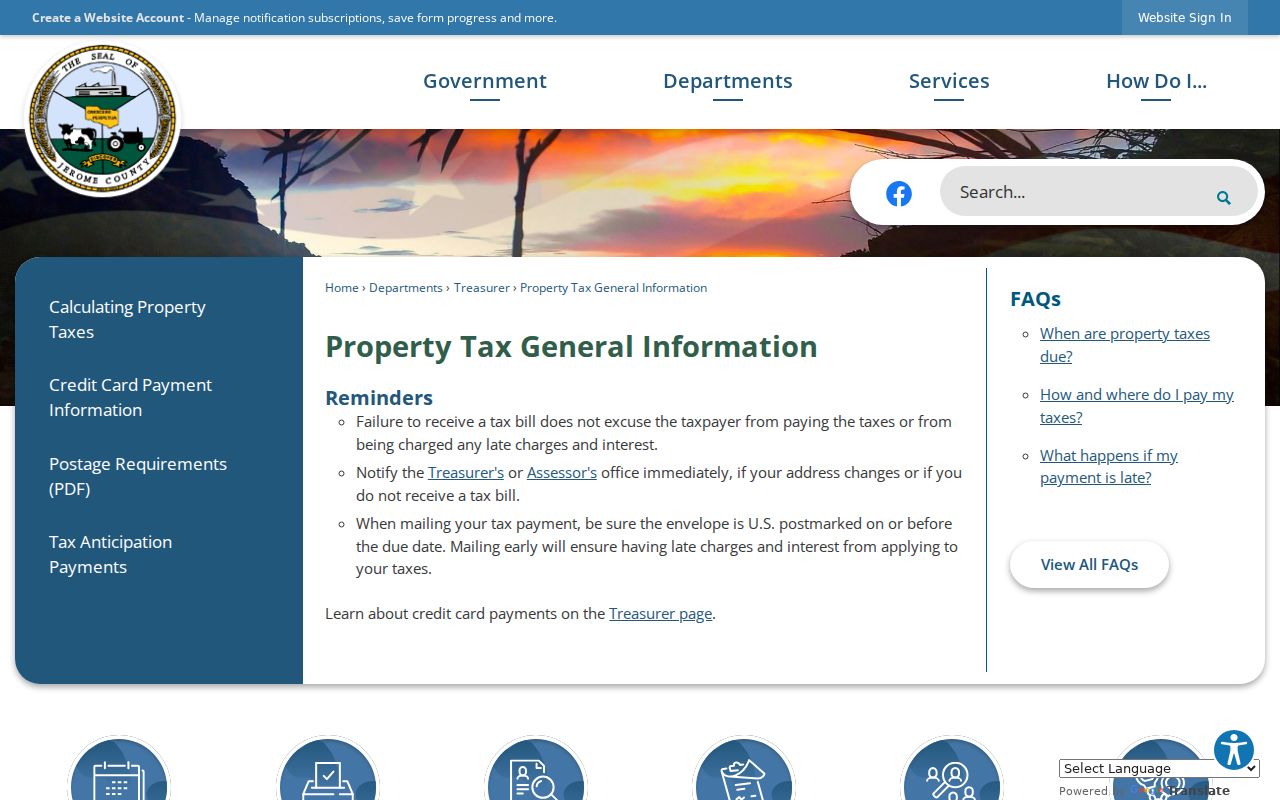
The page gives rules; the Treasurer gives status.
Jerome County Card Payments Are Not a Record Search
The Treasurer links to Access Idaho's payment page for card payments. That page pays bills. A payer needs the bill and the amount. A card payment adds a 2.50 percent fee. Ask the Treasurer first for balances, prior years, or delinquency dates. The office sits at 300 N Lincoln Avenue, Suite 212. It is open weekdays from 8:30 a.m. to 4:30 p.m. Phone, mail, and counter access are available. For property records questions, start with the official Treasurer page.
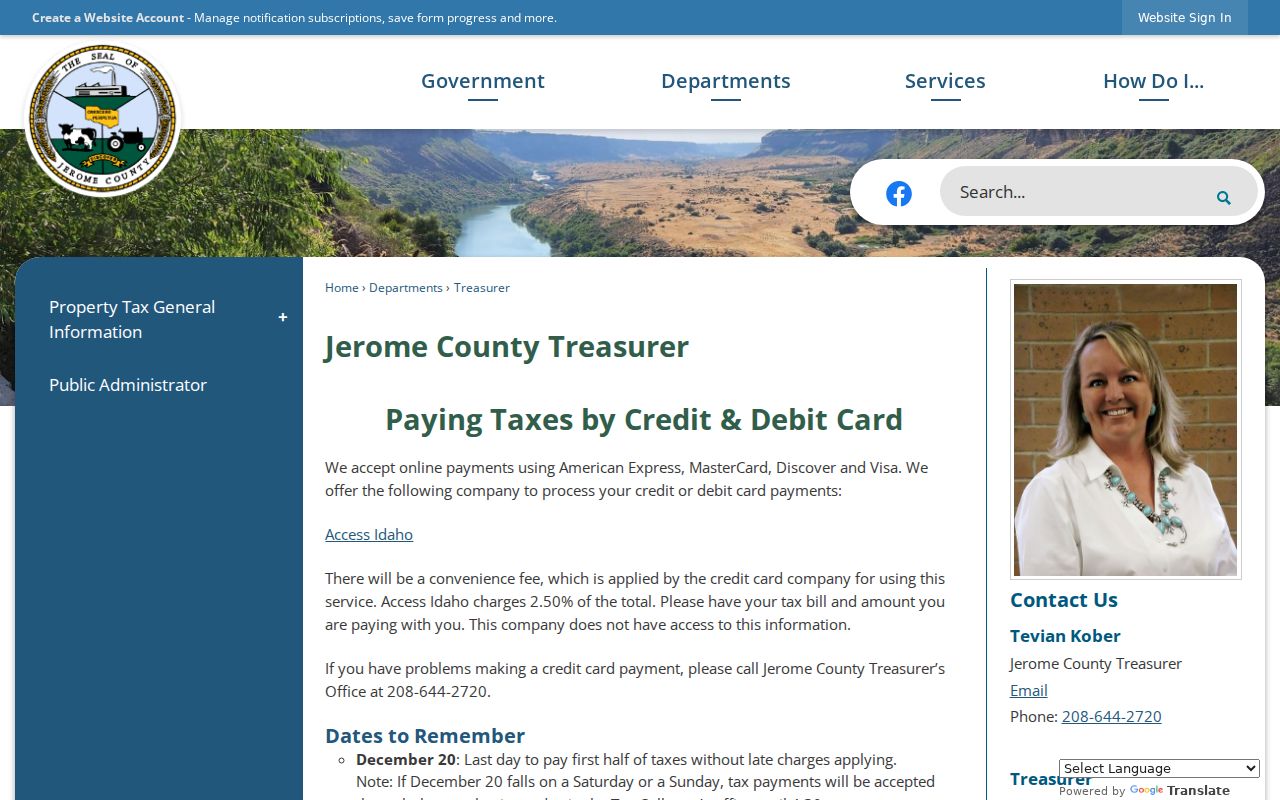
The capture also shows current notices that must be rechecked before anyone acts.
Jerome County Exemptions Start With Current Forms
The Assessor Forms page lists address changes, casualty-loss relief, hardship material, property-tax exemptions, manufactured-home statements, and personal-property declarations. Idaho's homeowner exemption guidance explains the state framework. Eligibility and filing still must be confirmed for the current year.
The county farm questionnaire digs into detail. It asks about operation type, water source, crop acreage and rotation, grazing acres, and animal units, and it names areas including Jerome, Eden, Hazelton, Crestview, and Hunt. Those fields support assessment work, not deed research.
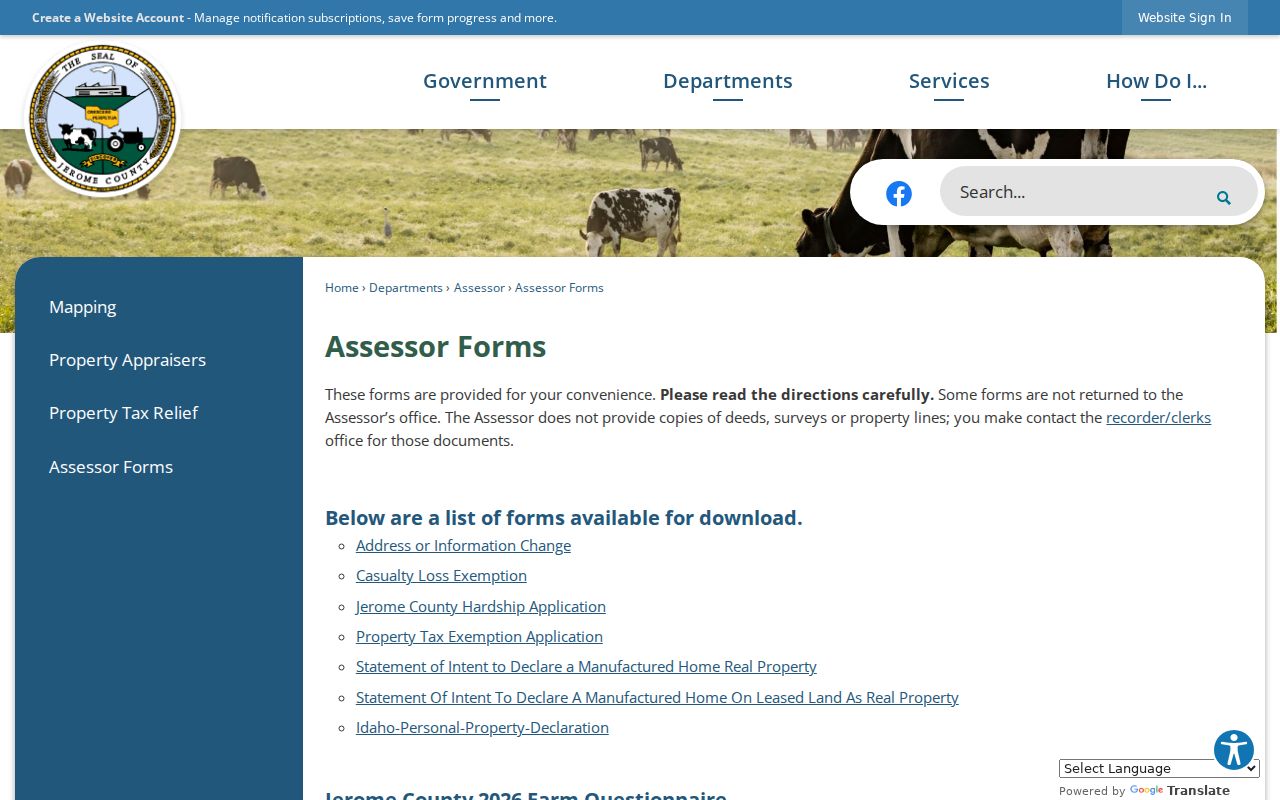
Use the live form list because requirements can change between years.
Appeal a Jerome County Assessment on Time
Assessment notices usually go out on the first Monday in June. Mark the calendar. Jerome County sets the appeal deadline on the fourth Monday in June through the commissioners' office, and a strong file pairs the PIN and tax year with concrete evidence. Evidence beats opinion in an appeal.
Appeal window. Confirm the current filing instructions as soon as the notice arrives; missing the June window can end that year's review route.
The Idaho Tax Commission overview explains how assessors estimate what a typical buyer would pay on January 1. No Jerome-specific ratio figure appears there. Do not substitute a statewide number for the parcel record.
Tax-Deed Notices Need a Fresh Jerome County Check
The Jerome County Treasurer page carried a 2026 sealed-bid tax-deed notice. It listed PINs, addresses, minimum-bid context, and instrument numbers. Property was offered as-is. Commissioners could reject bids. The notice proves no completed sale, redemption outcome, value, or current title.
A thorough property records request covers real ground. Ask for the PIN, tax years, bill, status, and delinquency dates. Request the notices, application, and sale result too. Include the recorded tax-deed instrument and any excess-funds referral. Since a 2016 law change, tax-deed excess funds go to the Idaho State Treasurer's unclaimed-property department. A claimant needs documentation.
Dated material. Recheck every deadline, parcel list, minimum bid, and sale term on the live Treasurer page.
Request Older Jerome County Property Tax Records
The web pages only reach back so far. For anything older, the county request hub is the right channel. Frame the ask narrowly. Give the PIN, the tax year, and the type of record you want. It also helps to request a fee estimate, your preferred delivery format, and the correct custodian if the first office does not hold the item. Historic tax research can point beyond Jerome County, too. The Idaho State Archives holds older material, while the current Assessor and Treasurer stay the best contacts for a live parcel.
A good written request is specific. Name the exact item, whether a tax bill, assessment, payment entry, delinquency notice, or tax-deed instrument. Add a date range and ask the office to flag anything withheld or redacted. That beats asking for every record tied to an address. Splits and consolidations complicate things. If a parcel went through one, send both the current PIN and any older identifier that appears on a deed or bill.
Visiting in person? Bring the PIN, the tax year, and a copy of the notice that raised the question. Staff can then separate an assessment correction from a payment correction, since the Assessor and Treasurer each maintain different parts of the file. Prefer mail? Include a return address and ask for the fee quote before copies are run.
Finally, keep a simple log of each office contact. Note the date, the staff route, the year searched, the format received, and the fee quoted. Jerome County offices release records from different dates, and the log explains why names or parcel descriptions may not line up. It also preserves the chain from a tax notice to a recorded tax-deed instrument, rather than treating the notice itself as the final event.
Note: A tax payment record supports research, but the latest recorded deed controls a different ownership question.