
Jerome County Deed Types
A recorded deed proves the document entered the official county record. It names the parties. It describes the land, states the form of conveyance, and carries a recording reference. Different deed forms transfer different interests. Some arise from different events, so the label matters. Copy it exactly as written.
| Deed Type | What It Does | Common Use |
|---|---|---|
| Warranty deed | Conveys land with stated title promises | Ordinary voluntary transfer |
| Quitclaim deed | Conveys whatever interest the grantor holds | Interest cleanup or intra-family transfer |
| Trustee's deed | Conveys under a trustee's authority | Trust or foreclosure event |
| Personal representative or decree transfer | Moves an estate interest under legal authority | Estate administration |
| Tax deed | Records a conveyance tied to tax enforcement | Completed tax-deed process |
One deed never tells the whole story. Deeds of trust, mortgages, assignments, reconveyances, releases, liens, lis pendens, easements, rights-of-way, covenants, restrictions, plats, and surveys can all attach to the same legal description. A careful chain review records each of these items without mislabeling them as ownership transfers.
Start at Jerome County Recorder
The Jerome County Auditor/Recorder holds the land records. The office accepts and keeps every recorded instrument. Visit at 300 North Lincoln Avenue, Room 301, Jerome. Or call 208-644-2714 during weekday hours, 8:30 a.m. to 4:30 p.m. The Assessor directs deed and survey questions straight to this office.
The Recorder publishes no public grantor-grantee index on the web. So call, visit, or send a narrow written request. Do not assume all Jerome County deed records can be searched online. Ask about the direct index, reverse index, images, email options, and certified copies.
The official office page displays contact details and current services.
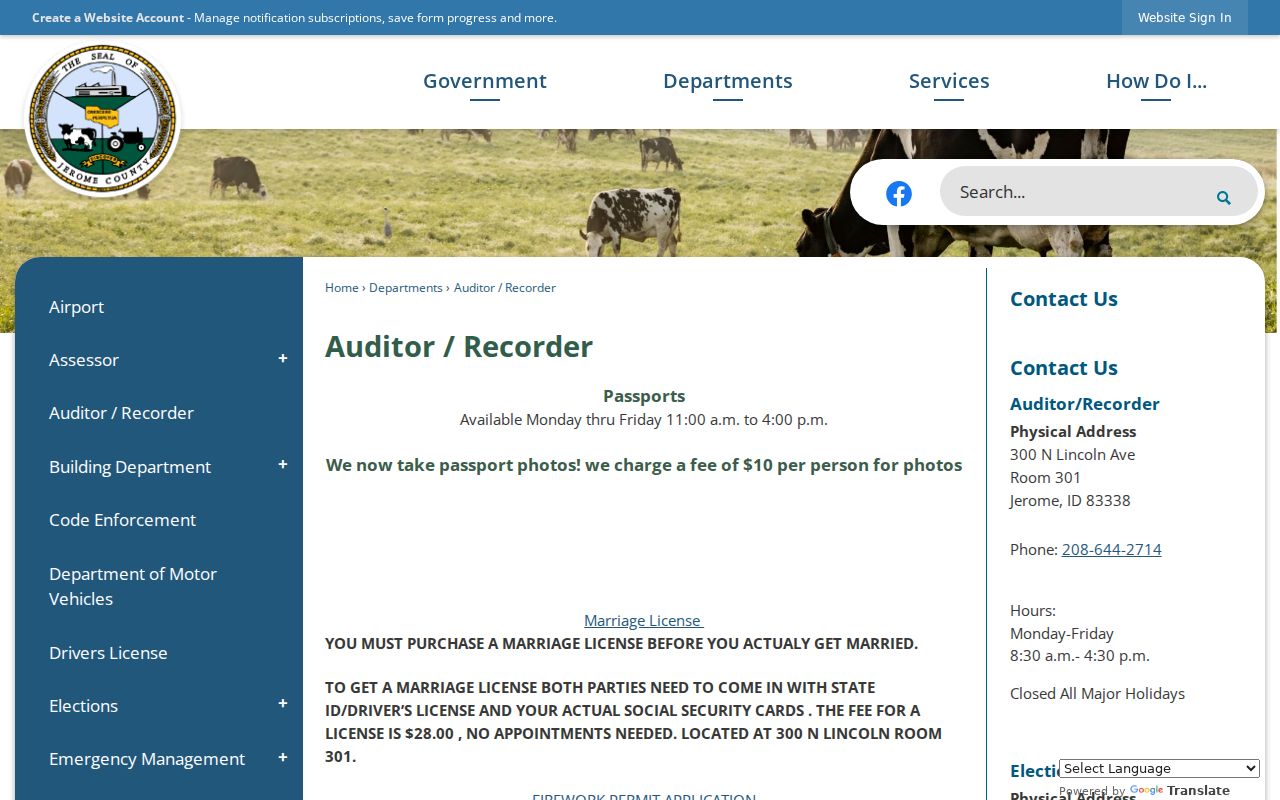
Its office routing confirms where recorded conveyances and related instruments must be requested.
Jerome County Instrument Search Keys
A precise request saves real time when no public web index exists. Pull every stable cross-reference from the parcel record, tax roll, or a prior deed, and lead with those.
| Search key | How it narrows deed records | Handling note |
|---|---|---|
| Grantor or grantee | Finds instruments indexed to a party | Try exact trust or entity variants |
| Instrument number | Points to one recorded item | Preserve every digit |
| PIN and situs | Connects the modern parcel clue | Not a substitute for legal description |
| Legal description | Ties documents to the land | Keep source wording and abbreviations |
| Date range and document type | Limits staff search scope | Use an approximate range if needed |
Confirm fees with the Recorder before ordering copies. The county pages post no current image fee, certified-copy price, earliest indexed year, or digital cutoff.
Jerome County Grantor-Grantee Chain
The grantor conveys the interest. The grantee receives it. Direct indexes track grantors, while reverse indexes track grantees, and the pair together lets you reconstruct a chain of title, the ordered sequence of recorded transfers tied to one piece of land.
- Begin with the latest deed found for the legal description.
- Record its grantee, grantor, recording date, deed type, and instrument or book/page reference.
- Search the grantor as an earlier grantee, using the same land description.
- Repeat the process while logging liens, releases, surveys, and other cross-references.
- Move to physical volumes, microfilm, or archives when the current office index ends.
Index terms
- Grantor
- The party transferring an interest.
- Grantee
- The party receiving an interest.
- Chain of title
- The linked sequence of recorded transfers.
- Book/page
- A volume-and-page locator used by older record systems.
- Instrument number
- A unique reference assigned to a recorded document.
Jerome County Survey Cross-References
A City of Jerome attachment shows how instrument numbers work in practice. A one-page record of survey and boundary adjustment was recorded on November 28, 2022 at 9:35:23 a.m. The instrument number is #2225289. It names EHM Engineers, shows a zero-dollar recording fee, and involves Jerome Recreation District land.
That survey cites prior Survey #2221430 plus Deeds #248385 and #266760. This is why instrument numbers matter. One known record opens a cluster of earlier deeds, surveys, and boundary work. No street address is needed.
Recorded surveys are not assessor maps. For a boundary question, review the recorded survey and its legal calls. Leave legal field work to a licensed surveyor. The GIS polygon is just an orientation tool.
Jerome County Legal Descriptions
Legal descriptions differ across Jerome County. A Jerome-area lot may cite a subdivision name and lot number. Rural farmland may carry tax-lot wording with section, township, range, and acreage. The GIS publishes an abbreviated DisplayDes field, but the Recorder's instrument controls deed research.
Copy every abbreviation as found. Never quietly convert map text into another form. Check a lot-and-block description against the recorded plat. A rural survey description may hold calls and prior-instrument references the parcel popup omits. When two acreage figures disagree, record both and chase down the source of each.
Jerome County Entity Deeds
Jerome County parcels show trusts and LLCs alongside individual owners. Search the exact displayed wording first. Then try a normalized legal suffix or a reordered trust name. A business may also have merged or filed under a prior name.
Idaho SOSBiz verifies an entity's legal name, status, registered agent, and filings. Those facts sharpen a party search. But a registered agent is not the grantee. The agent's address is not the parcel situs. UCC filings cover security interests and prove nothing about land title.
Historic Jerome County Deed Leads
For older material, the FamilySearch Jerome catalog offers a concrete lead. It lists direct and reverse indexes to miscellaneous records from 1894 through 1929 and miscellaneous records from 1892 through 1920 across five reels, with originals held at the courthouse and the Idaho State Archives.
None of that establishes an earliest deed year. The exact beginning and survival of Jerome County deed books remain unconfirmed, so ask the Recorder or State Archives about the earliest surviving deed book, grantor and grantee indexes, plat book, tax roll, and any reconstructed volume.
Jerome's newspaper archive adds names, legal notices, and farm or subdivision terms from 1908 through 2008. Treat each clipping as a lead only. Verify the legal effect against the recorded instruments themselves.
Tax Deeds Need Jerome Follow-Up
A Treasurer notice from 2026 listed tax-deed instruments #2603316 through #2603321. Those numbers work as Recorder cross-references. The notice also carried parcel numbers and some addresses. But a notice alone proves nothing about the final sale. It also proves nothing about redemption or current title status in Jerome County deed records.
Ask for the final recorded tax deed plus anything recorded after it. Tax-deed property sells as-is. That makes a title review essential. Never assume clean title or fair market value from a bid notice.
Request a Jerome County Deed
Reach the Recorder at the counter. You can also call the office by phone. Another option is the county's department-specific public-record route for Jerome County property records. Say which product you need. That could be an inspection copy, plain copy, legible image, or certified copy. Always give the instrument number if you have it. Without one, supply the parties, document type, date range, PIN, and legal description.
Confirm details before ordering. Ask about the accepted request method. Also ask about the search charge, copy cost, certification cost, and delivery options. Older deed records may sit in an index or deed book. They may also rest on microfilm or in an archive. They may not exist as an online image.
Recorded, not guaranteed. Jerome County deed records show documents accepted for recording. They are not a title opinion, and unrecorded interests or unresolved defects can still exist.
Jerome County Court Instruments
Foreclosures, quiet-title cases, probate matters, judgments, and lis pendens can all explain a break or shift in the deed chain. Start with the public case lead in Idaho iCourt. Then request the exact order or filing from the Fifth Judicial District. The court request form wants the case number, case name, case type, file date, document, delivery method, and certification choice. The Idaho iCourt portal is the natural first stop for case research.
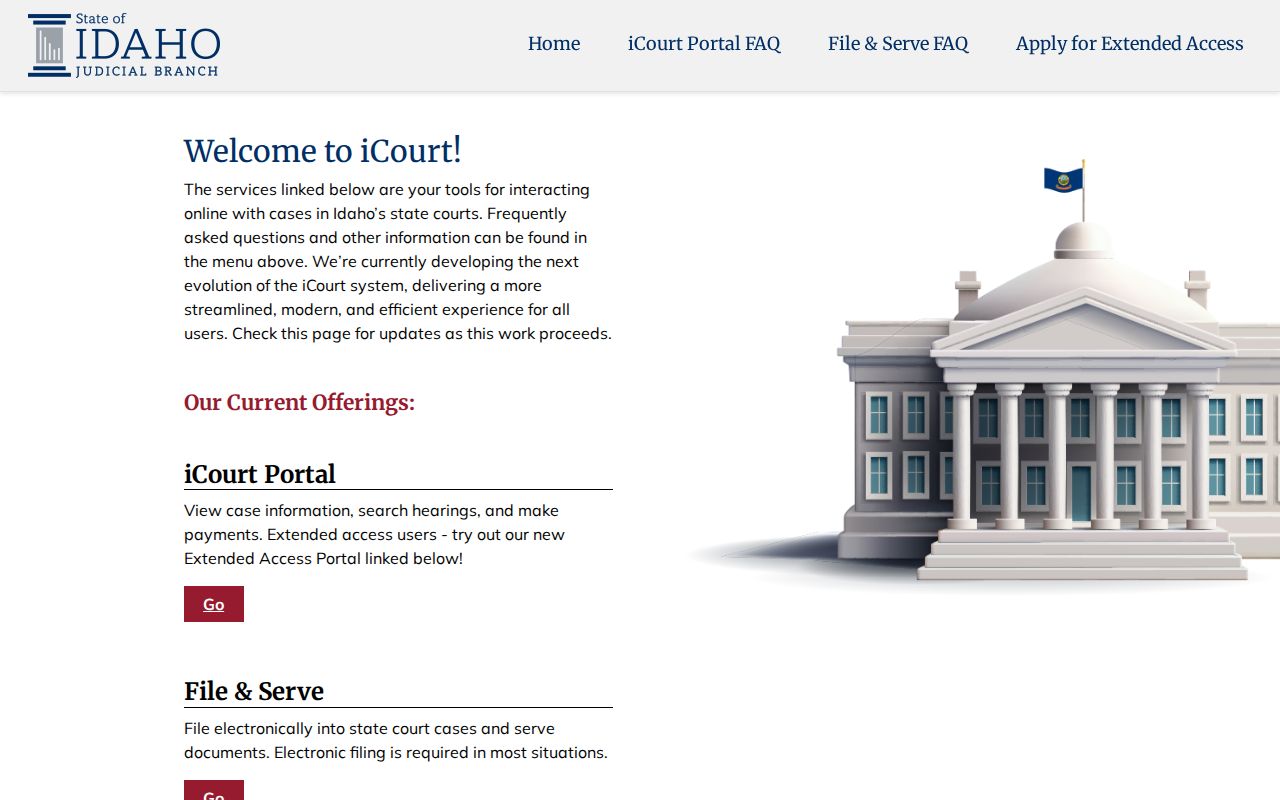
A case result is only a lead. The Court Information page lays out the local clerk route for Jerome County.
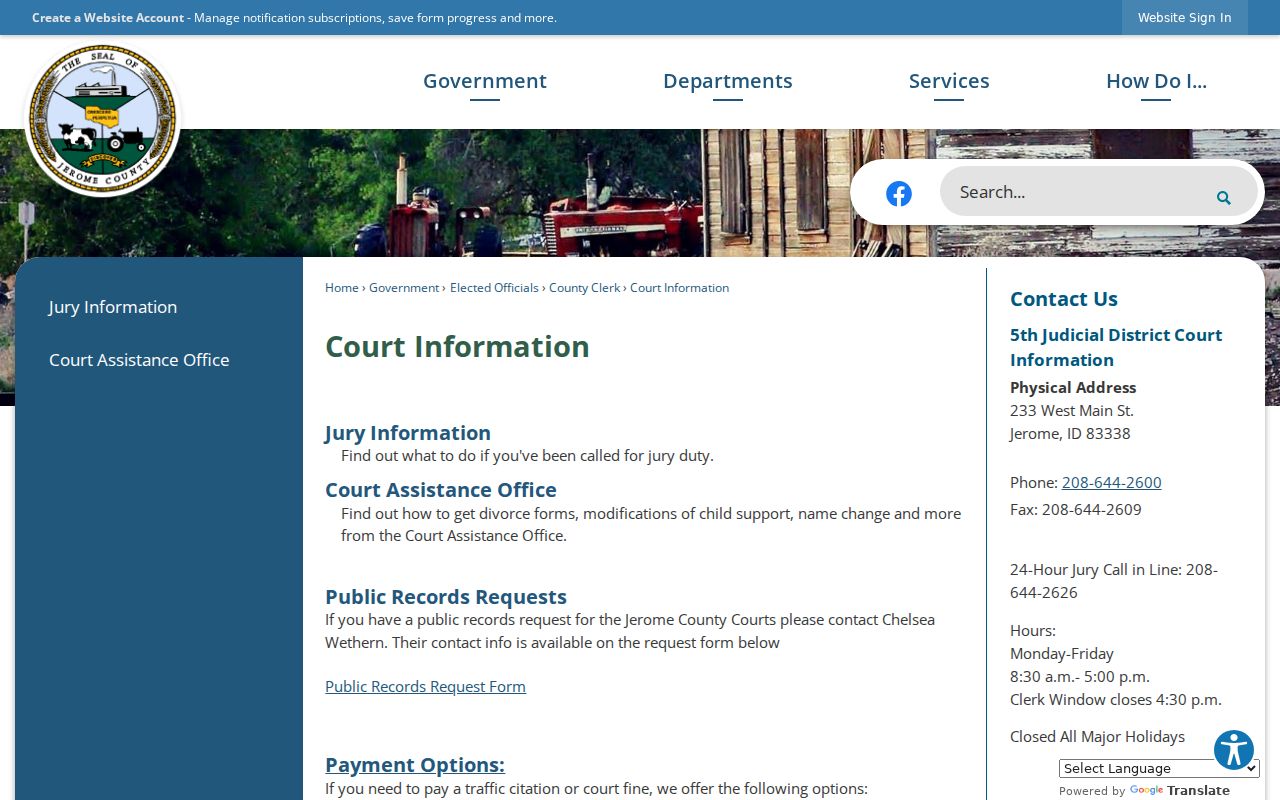
Court sources point you to the right clerk request path. The Recorder still controls the land-record index. Keep the two systems straight. Once you locate an order, ask the Recorder a question. Ask whether an instrument tied to the legal description was ever recorded. Sealed and protected records may stay off limits. A party name alone never establishes title.
Jerome County Recording Details
For every deed or related instrument, note the document type, grantor, grantee, recording date and time. Also note the instrument number or book/page, page count, legal description, and stated consideration. Record the preparer or return address, acknowledgments, and prior references. Never back into a sale price from an assessed value. A tax notice will not do either.
An eRecording bulletin lists the Jerome County categories it accepts. Those include deeds, deeds of trust, reconveyances, trustee deeds, transfers or decrees. Easements, liens, and lis pendens are accepted too. That channel covers electronic submission only. It does not open public images or guarantee full historical coverage.